

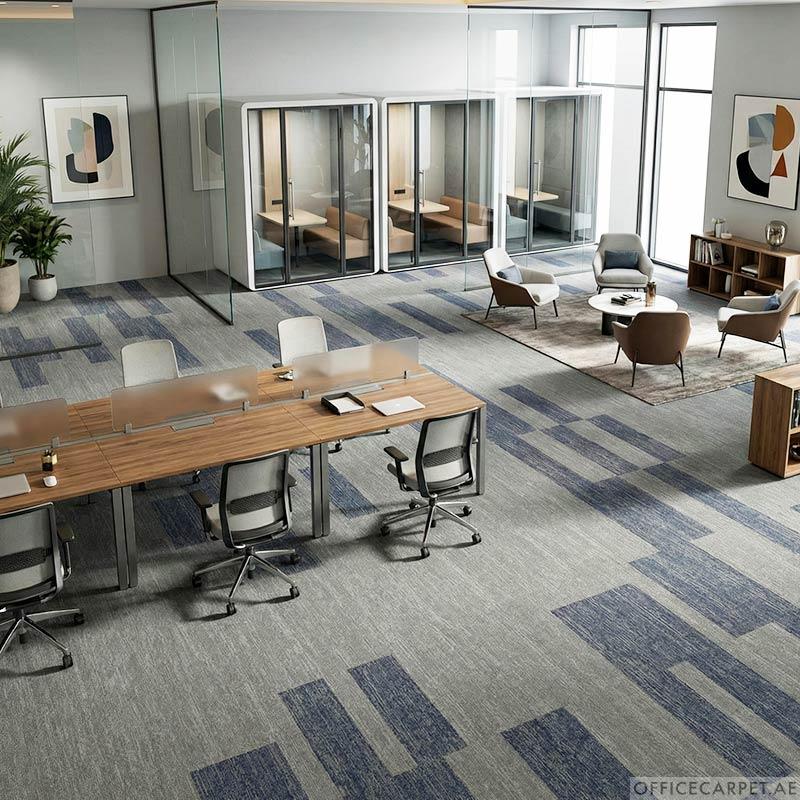

Modern workplaces are evolving rapidly, and flooring plays a bigger role in productivity, comfort, and aesthetics than many people realize. Among the most practical and versatile solutions available today are modular carpet systems designed specifically for commercial environments. These flooring options combine durability, flexibility, and design adaptability in ways that traditional carpets often cannot match.
Understanding how modular carpet systems function, their advantages, and how they fit into contemporary office environments can help decision-makers create better, more efficient workspaces. This guide explores their structure, performance benefits, maintenance expectations, and design potential in depth.
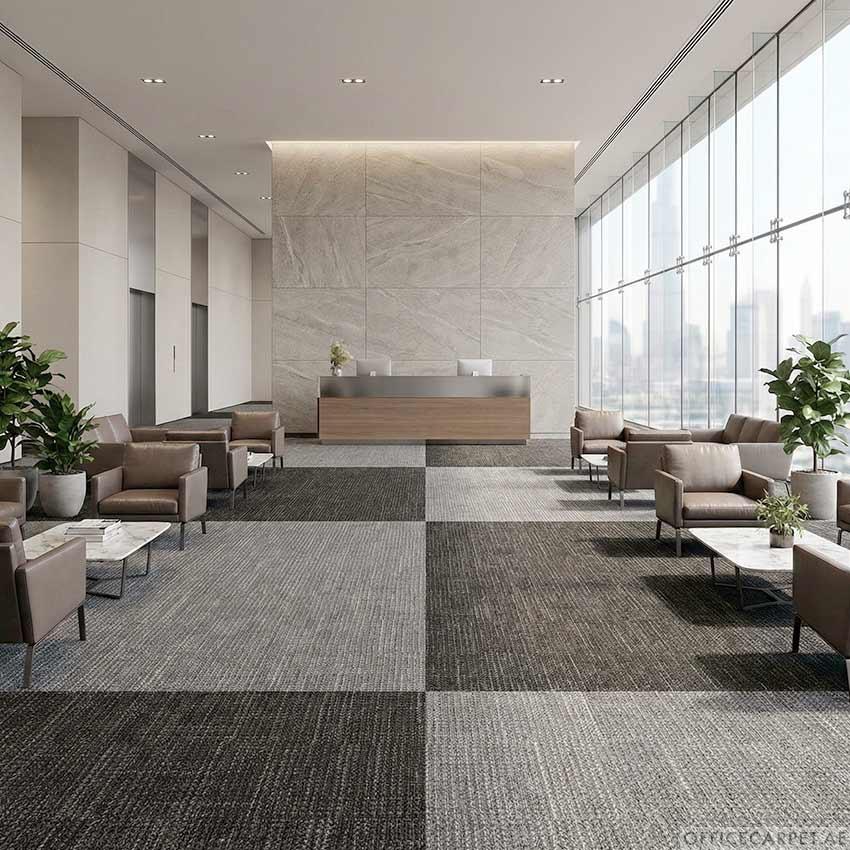
What Are Office Carpet Tiles and How Do They Work in Modern Workspaces
Office carpet tiles are modular squares or rectangles of carpet designed to be installed individually rather than as one continuous roll. Unlike traditional broadloom carpets, these tiles are manufactured with reinforced backing systems that allow them to sit securely on subfloors with adhesive or interlocking mechanisms.
In modern workspaces, flexibility is essential. Departments grow, layouts change, and workstations shift frequently. Modular flooring supports this dynamic environment by allowing individual tiles to be lifted, replaced, or rearranged without removing the entire floor covering.
The structure of most tiles includes:
- A durable face fiber layer
- A cushioning or stabilizing backing
- A moisture-resistant base
- Precision-cut edges for seamless alignment
Because of this layered design, office carpet tiles provide both structural integrity and aesthetic consistency while remaining adaptable to evolving workplace layouts.
Key Benefits of Using Modular Carpet Tiles in Office Environments
Modular carpet systems offer several functional advantages in commercial settings. These benefits go beyond aesthetics and directly influence operational efficiency.
1. Flexibility in Layout Changes
Tiles can be removed and reinstalled when reconfiguring office spaces. This is especially useful in collaborative environments or co-working spaces.
2. Cost-Efficient Maintenance
If one section becomes damaged or stained, only the affected tile needs replacement rather than the entire carpet.
3. Reduced Waste
Because only small sections are replaced, material waste is significantly minimized.
4. Easy Installation
Tiles can often be installed in phases, reducing disruption to daily operations.
5. Design Creativity
Different colors and patterns can be combined to define zones, create pathways, or add visual interest.
These benefits make modular flooring systems especially practical for high-traffic commercial interiors.
How Office Carpet Tiles Improve Acoustics and Reduce Noise Levels
Noise control is a critical factor in office productivity. Hard flooring surfaces can amplify sound, leading to distractions and reduced concentration.
Carpet tiles help reduce:
- Footstep noise
- Chair movement sounds
- Echo within open-plan spaces
- Vibrations transmitted through floors
The fiber structure absorbs airborne sound waves, while the backing layer reduces impact noise. In open-plan offices, this can significantly improve speech privacy and reduce distractions.
Additionally, when properly supported by quality carpet flooring installation, the acoustic performance of modular flooring is enhanced. A stable, well-prepared subfloor ensures optimal sound absorption and long-term effectiveness.
Comparing Office Carpet Tiles with Traditional Broadloom Carpets
Both modular tiles and broadloom carpets serve similar purposes, but they differ significantly in structure, performance, and maintenance.
Installation
- Broadloom: Installed in large rolls, often requiring stretching and seam alignment.
- Tiles: Installed individually with adhesive or tack systems.
Replacement
- Broadloom: Damaged areas often require patching or full replacement.
- Tiles: Individual pieces can be swapped easily.
Waste Management
- Broadloom: Excess material trimming can create more waste.
- Tiles: Minimal cutting reduces offcuts.
Design Versatility
- Broadloom: Limited to continuous patterns.
- Tiles: Mix-and-match capabilities allow creative layouts.
For offices expecting frequent layout adjustments, modular systems provide clear logistical advantages.
Understanding Materials, Backing Types, and Durability Factors
The performance of carpet tiles depends heavily on their materials and construction quality.
Common Fiber Types
- Nylon: Highly durable and resilient under heavy foot traffic.
- Polypropylene: Stain-resistant and cost-effective.
- Recycled fibers: Environmentally friendly alternatives.
Backing Systems
- PVC backing for durability
- Bitumen backing for stability
- Cushion-backed systems for added comfort
Durability factors include:
- Fiber density
- Twist level of yarn
- Backing thickness
- Moisture resistance
In some cases, professional techniques such as carpet stitching dubai may be used to reinforce edges or customize finishes for specific layouts, further extending performance life.
High-quality modular systems are engineered to withstand rolling office chairs, high foot traffic, and frequent cleaning cycles.
Maintenance Requirements and Long-Term Performance Expectations
One of the primary advantages of modular flooring is simplified maintenance. However, proper care still determines long-term performance.
Daily Maintenance
- Vacuum high-traffic areas regularly
- Address spills immediately
- Use entrance mats to reduce dirt entry
Periodic Deep Cleaning
- Low-moisture cleaning methods
- Hot water extraction for deeper sanitization
- Targeted tile replacement for persistent stains
Long-term performance depends on:
- Traffic volume
- Cleaning frequency
- Indoor air quality
- Subfloor conditions
Because individual tiles can be replaced, maintaining a uniform appearance over many years becomes more manageable compared to traditional carpet systems.
Sustainability Features and Eco-Friendly Manufacturing Options
Environmental responsibility has become a major priority in modern construction and interior design. Many carpet tile manufacturers now focus on sustainable production methods.
Common sustainability features include:
- Recycled fiber content
- Low-VOC adhesives
- Carbon-neutral manufacturing processes
- Recyclable backing materials
Modular systems also contribute to sustainability by reducing waste during installation and replacement cycles. Instead of discarding entire rolls, only small sections are replaced when needed.
Additionally, some manufacturers offer take-back programs to recycle used tiles, further supporting circular economy principles.
Common Design Layouts and Patterns for Professional Interiors
Design flexibility is one of the strongest advantages of modular carpet systems. Tiles can be installed in various patterns to achieve different visual effects.
Popular Layout Styles
- Monolithic Installation
Tiles are aligned uniformly for a seamless appearance. - Quarter Turn Pattern
Each tile is rotated 90 degrees to create subtle texture variation. - Ashlar Pattern
Tiles are staggered in a brick-like formation. - Randomized Mix
Multiple colors or textures define zones within open-plan spaces.
Designers often use contrasting tile shades to:
- Define collaborative areas
- Highlight walkways
- Create visual boundaries
- Add subtle branding elements
This adaptability makes modular flooring suitable for corporate offices, educational facilities, and creative workspaces alike.
Conclusion
Office carpet tiles offer a practical, adaptable, and performance-driven flooring solution for modern workspaces. Their modular structure supports easy maintenance, efficient repairs, and flexible design layouts. In addition to improving acoustics and comfort, they also contribute to sustainability through reduced waste and recyclable materials.
By understanding their construction, materials, maintenance needs, and design possibilities, organizations can make informed decisions that align with both operational and environmental goals.
FAQs
1. What makes office carpet tiles different from regular carpets?
Office carpet tiles are modular sections designed for individual installation and replacement, unlike traditional broadloom carpets that are installed as one continuous roll.
2. Are office carpet tiles suitable for high-traffic areas?
Yes, high-quality modular tiles are engineered with durable fibers and reinforced backing systems to withstand heavy commercial foot traffic.
3. How do carpet tiles contribute to sound insulation?
Their fiber structure absorbs airborne noise, while the backing reduces impact sounds such as footsteps and chair movement.
4. Can damaged tiles be replaced individually?
Yes, one of the main advantages of modular flooring is the ability to remove and replace individual tiles without affecting surrounding sections.
5. What materials are commonly used in office carpet tiles?
Common materials include nylon, polypropylene, recycled fibers, and various backing systems such as PVC or cushion-backed designs for enhanced stability and comfort.


